
If you’re a PhD holder, postdoctoral researcher, or professor considering Australia’s National Innovation Visa (NIV, Subclass 858), this guide was built for you. Not a generic policy summary — a practical, evidence-focused roadmap to help you assess your eligibility, build a compelling portfolio, and understand exactly how case officers evaluate academic applications.
What Is the National Innovation Visa?
The National Innovation Visa (Subclass 858) replaced Australia’s Global Talent Visa on 7 December 2024. It’s a direct pathway to permanent residency for individuals with internationally recognised records of exceptional and outstanding achievement.
For academic researchers, the NIV represents one of the most attractive migration pathways available anywhere in the world:
- No occupation list — your research field qualifies if it aligns with priority sectors
- No skills assessment — your publication record and peer recognition are the assessment
- No employer sponsorship needed — you apply based on your own merit
- No mandatory salary threshold — though earning above $183,100 (2025–26 Fair Work High Income Threshold) strengthens your case
- Permanent residency from day one — no temporary visa stage
The Department of Home Affairs uses a five-level priority framework. Academic researchers typically fall into Priority 1 (if you hold a top-of-field award), Priority 3 (if your research aligns with Tier One sectors like Critical Technologies, Health Industries, or Renewables), or Priority 4 (Tier Two sectors including Education, Defence & Space, Resources, and others).
Understanding where you sit in this hierarchy isn’t academic trivia — it directly affects your processing speed and likelihood of receiving an invitation.
Do I Qualify? A Self-Assessment Framework for Academic Researchers
Before investing time and money, you need an honest self-assessment. The Department looks for evidence that you operate at an international “top-of-field” level. For academics, this translates into measurable indicators.
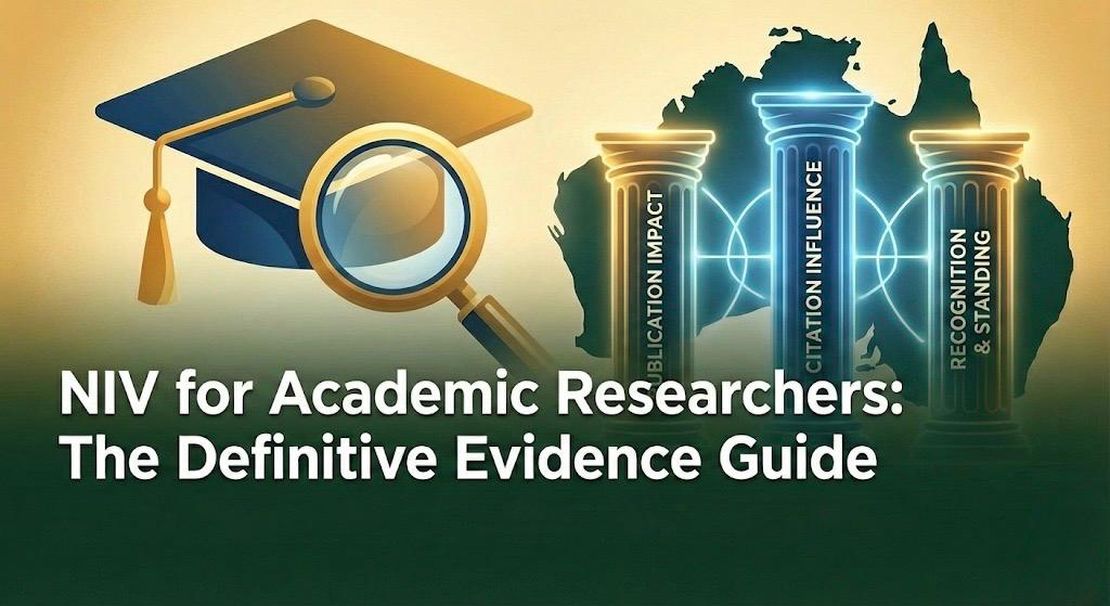
The Three Pillars of Academic NIV Eligibility
Pillar 1: Publication Impact
- Publications in top-ranked journals (Nature, Science, Lancet, Cell, PNAS, or the leading journals in your specific discipline)
- Journal rankings matter — Q1 journals in your field carry the most weight
- First-author and corresponding-author publications are valued more heavily than middle-authorship
Pillar 2: Citation Influence & h-Index
- Your h-index relative to your career stage is a key metric
- Your citation count demonstrates the influence of your work beyond your immediate research group
Pillar 3: Recognition & Standing
- Keynote or invited presentations at major international conferences
- Competitive research grants at national or international level
- Editorial board memberships, peer review invitations for top journals
- Awards, prizes, and fellowships
- Media coverage or policy influence from your research
h-Index Benchmarks by Career Stage
The Department has specifically cited an h-index of 14 for an early career researcher as an indicator of high academic influence. But what does “good” look like across career stages? Here are the benchmarks we use when assessing academic NIV candidates:
| Career Stage | Years Post-PhD | Strong h-Index | Exceptional h-Index | Notes |
|---|---|---|---|---|
| Early Career Researcher | 0–5 years | 8–15 | 16+ | Quality over quantity; high-impact first-author papers matter most |
| Mid-Career / Senior Postdoc | 5–10 years | 15–25 | 26+ | Grant track record becomes increasingly important |
| Associate Professor (Level D) | 10–15 years | 25–40 | 41+ | Leadership of research groups, PhD supervision |
| Full Professor (Level E) | 15+ years | 40–60 | 61+ | International committee roles, field-defining contributions |
Important caveats:
- h-index norms vary dramatically by discipline. An h-index of 20 in pure mathematics is outstanding; in biomedical sciences, it may be mid-career average
- Use field-normalised metrics where possible (Field-Weighted Citation Impact, category-normalised citation rates)
- Google Scholar h-index is typically higher than Scopus or Web of Science — be consistent in which database you cite
- The Department does not have rigid cutoffs. These benchmarks contextualise your standing, not define it
Journal Rankings: What Counts as “Top-Ranked”?
The Department references publications in journals like Nature, Lancet, and Acta Numerica. But most researchers don’t publish exclusively in these flagships. Here’s how to frame your publication record:
Tier 1 — Flagship multidisciplinary journals: Nature, Science, PNAS, Cell, The Lancet, NEJM, BMJ
Tier 2 — Top field-specific journals (examples by discipline):
- Computer Science: IEEE TPAMI, NeurIPS proceedings, ICML, Journal of Machine Learning Research
- Engineering: Nature Energy, Advanced Materials, Nano Letters
- Health/Medical: JAMA, Annals of Internal Medicine, Nature Medicine
- Physics: Physical Review Letters, Nature Physics
- Environmental Science: Nature Climate Change, Environmental Science & Technology
- Economics: American Economic Review, Econometrica, Quarterly Journal of Economics
Tier 3 — Strong Q1 disciplinary journals: Any journal ranked in the top quartile (Q1) of its Scopus or JCR category
How to present this: Don’t just list publications. Quantify impact. “Published 12 articles in Q1 journals including 3 in the top 5% by impact factor in my field” is far stronger than a bare publication list.
Conference Prestige: What Qualifies as “High-Profile International”?
The Department values keynote or invited presentations at high-profile international conferences. Not every conference presentation strengthens your case equally.
Strongest evidence:
- Keynote or plenary speaker at a major international conference (>500 attendees, established reputation)
- Invited speaker at a flagship conference in your field (e.g., Gordon Research Conferences, IEEE flagship events, discipline-specific world congresses)
- Named lecture or distinguished speaker series
Good supporting evidence:
- Oral presentation (selected from competitive abstract review) at a top-tier conference
- Session chair or organiser at a major conference
- Conference best paper awards
Weak evidence:
- Poster presentations (unless at an exceptionally competitive venue)
- Presentations at regional or national conferences only
- Conferences with minimal peer review of submissions
Research Grants: The Evidence That Case Officers Love
Receipt of a national-level research grant is explicitly listed as an indicator of exceptional achievement. For academics, competitive grants are among the strongest evidence you can present.
Australian grants (if you’ve worked in Australia):
- ARC Discovery Projects, Future Fellowships, Laureate Fellowships, DECRA
- NHMRC Investigator Grants (particularly at EL2, L1, L2 levels)
- CRC grants, MRFF grants
International equivalents (highly valued):
- US: NSF CAREER Award, NIH R01, DARPA grants, DOE Early Career Awards
- UK: UKRI Future Leaders Fellowships, ERC Starting/Consolidator/Advanced Grants, Wellcome Trust Senior Fellowships
- EU: ERC grants (any level), Marie Skłodowska-Curie Individual Fellowships
- Canada: NSERC Discovery Grants, CIHR Project Grants, Canada Research Chairs
How to present grants: Include the grant title, funding body, total value, your role (PI vs CI), and the competitive success rate if known. A grant worth $500,000 from a funding body with a 15% success rate tells a compelling story.
The Case Officer’s View: How Assessors Evaluate Academic Evidence
Understanding how your application is actually assessed changes how you build it. Here’s what happens behind the scenes.
What Case Officers Are Looking For
A case officer evaluating an academic NIV application is trying to answer one question: Is this person genuinely operating at an international top-of-field level?
They are not experts in your discipline. They are trained assessors working with internal guidelines, and they evaluate your evidence against the published indicators. This means:
Your evidence must be self-explanatory. Don’t assume the assessor knows that Physical Review Letters is the most prestigious journal in physics. Contextualise everything.
Quantified claims beat qualitative claims. “Top 2% of researchers in my field by citation count (per Scopus)” is stronger than “highly cited researcher.”
Recency matters. The Department looks for recent publications in top journals and recent keynote appearances. A brilliant publication record from 2010 with nothing since raises questions about current standing.
They cross-reference. Case officers verify claims against Google Scholar profiles, university websites, and journal databases. Ensure your online presence is consistent and current.
The “asset to Australia” criterion is holistic. Beyond your achievements, the assessor considers whether you’ll contribute to Australia’s research ecosystem — alignment with priority sectors, potential for collaboration with Australian institutions, and ability to obtain employment or establish yourself independently.
Common Mistakes That Weaken Academic Applications
Mistake 1: Listing achievements without context. Saying you published in “Journal of Catalysis” means nothing to a non-specialist. Say “Journal of Catalysis, ranked #3 globally in catalysis research (Scopus), Impact Factor 13.5.”
Mistake 2: Relying on a single metric. A high h-index alone isn’t enough. Neither is a single Nature paper. The Department looks for a pattern of sustained excellence across multiple indicators.
Mistake 3: Weak nominator choice. Your nominator must have a national reputation in the same field as you. A professor who is well-regarded within their department is not the same as one with national or international standing. Choose a nominator who is themselves recognised at the level you’re claiming.
Mistake 4: Ignoring sector alignment. Your research must connect to one of the NIV priority sectors. A pure mathematician studying abstract topology needs to articulate how their work connects to Critical Technologies, or they risk falling into Priority 5 (lowest priority). Frame your work in terms the Department’s sector definitions recognise.
Mistake 5: Submitting an incomplete EOI. Your Expression of Interest cannot be updated after submission. This is not like a journal revision where you can add supplementary material. Everything must be right the first time.
Building Your Evidence Portfolio: A Practical Checklist
The strongest academic NIV applications present evidence across multiple categories. Use this checklist to audit your readiness.
Essential Evidence (Include All That Apply)
- Publication list with journal rankings, impact factors, and quartile positions for each
- Citation metrics — h-index (specify database), total citations, field-normalised citation impact
- Top publications highlighted — your 3-5 most impactful papers with citation counts and significance explained
- Competitive grants — funding body, value, success rate, your role
- Conference presentations — keynotes and invited talks, with conference attendance figures and selection rates
- Nominator statement — from someone with a genuine national reputation in your field
- CV/resume — comprehensive academic CV including all positions, grants, publications, students supervised
Strengthening Evidence (Highly Recommended)
- Google Scholar profile — public, up-to-date, showing metrics prominently
- Evidence of PhD supervision — number of completions, current students
- Editorial roles — journal editorial boards, guest editor positions, peer review for top journals
- Awards and prizes — with context on prestige and competitiveness
- Media coverage — press releases, news articles, policy documents citing your work
- Letters of support — from international collaborators, industry partners, or research leaders (in addition to your nominator)
- Salary evidence — employment contract or offer showing salary at or above the Fair Work High Income Threshold ($183,100 for 2025–26)
Sector Alignment Evidence
- Explicit mapping of your research to a Tier One or Tier Two priority sector
- Collaboration evidence with Australian institutions (if any)
- Statement of intent — how you plan to contribute to Australia’s research ecosystem
- Industry engagement — patents, industry partnerships, commercialisation, policy advisory roles
Priority Sectors: Where Does Your Research Fit?
Your sector alignment determines your processing priority. Here’s how common academic disciplines map to the NIV framework.
Tier One Sectors (Priority 3 — Fastest Processing)
Critical Technologies — AI/ML researchers, quantum computing, cybersecurity, robotics, advanced materials, photonics, autonomous systems, biotechnology, clean energy technology
Health Industries — Biomedical researchers, pharmaceutical scientists, genomics, precision medicine, medical device researchers, infectious disease specialists, health economists
Renewables and Low Emission Technologies — Clean energy researchers, hydrogen economy, carbon capture, circular economy, critical minerals processing, battery technology
Tier Two Sectors (Priority 4)
Education — Senior academics at Level D or E (Associate Professor or Professor), or international equivalents. Note: this sector specifically targets senior academic leadership, not all researchers.
Defence Capabilities and Space — Aerospace engineering, electromagnetic technologies, space systems, propulsion research
Financial Services and FinTech — Blockchain researchers, financial data science, cybersecurity for finance
Agri-food and AgTech — Agricultural scientists, food technology researchers, biosecurity specialists
Resources — Geologists, metallurgists, mining automation researchers, critical minerals specialists
What If Your Research Doesn’t Fit Neatly?
Many researchers work at disciplinary intersections. A computational biologist could align with Critical Technologies (AI) or Health Industries (genomics). A materials scientist might fit Critical Technologies (advanced materials) or Renewables (battery technology).
Strategy: Choose the sector alignment that most strongly connects your specific research outputs to Australia’s stated priorities. Use the Department’s own sector descriptions (from the legislative instrument) as your framing language.
State Nomination: The Priority 2 Pathway
State and territory government nomination places your application in Priority 2 — the second-highest processing priority. For academic researchers, this is a powerful option.
Which States Are Nominating?
As of early 2026:
New South Wales — Active. Has a dedicated Academic/Researcher pathway. Emphasises alignment with NSW strategic interests, including its 20-Year R&D Plan. EOI-based process through an online portal with expert review.
South Australia — Active. Categories include “Global researchers/thought leaders.” Involves an assessment interview with SA government representatives.
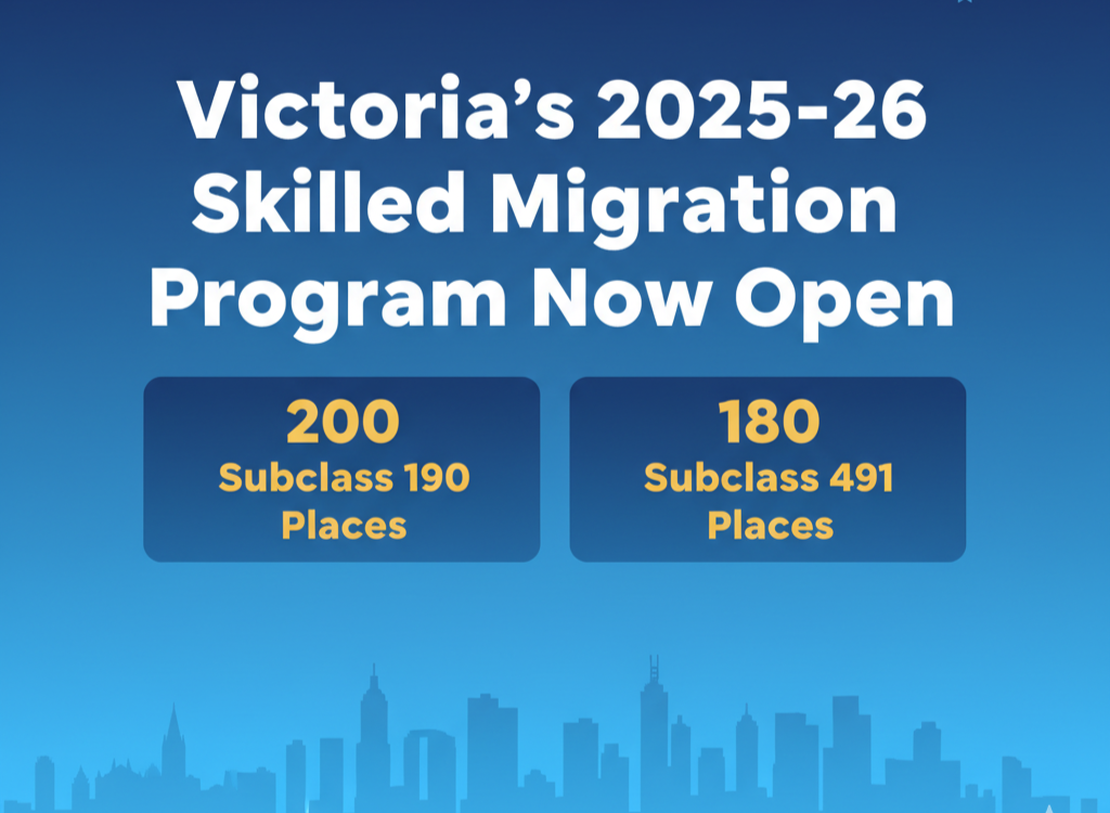
Victoria — Active (opened July 2025). Requires a referral from a relevant Victorian Government department or agency. Targets researchers with engagement with Victorian institutions.
Queensland — Framework under development. Expected to be assessed by Trade and Investment Queensland.
Other states (WA, TAS, NT, ACT) — Nomination frameworks not yet publicly available.
Should You Pursue State Nomination?
If you have an existing relationship with an Australian university or research institution in a particular state, state nomination can significantly accelerate your application. The trade-off: state nomination processes add time upfront, but move you from Priority 3–5 to Priority 2 once submitted.
Frequently Asked Questions
Can I apply for the NIV with just a PhD and no work experience?
A PhD alone is unlikely to be sufficient. The NIV requires an internationally recognised record of exceptional and outstanding achievement — meaning you need evidence of impact beyond completing your degree. However, a recent PhD graduate with strong publications in top-ranked journals, a competitive postdoctoral fellowship, and an above-average h-index for their career stage can build a viable case. The Department has cited an early career researcher with an h-index of 14 as an example of high academic influence.
What salary do I need for the National Innovation Visa?
There is no mandatory salary requirement for the NIV — this is a significant change from the old Global Talent Visa, where the Fair Work High Income Threshold was heavily weighted. Currently, earning at or above $183,100 per year (the 2025–26 threshold) is listed as a desirable indicator but not a prerequisite. For academic researchers, your publication record, grants, and recognition carry more weight than your salary. That said, if you have an offer from an Australian university at or above this threshold, include it — it strengthens the “asset to Australia” assessment.
Is there an age limit for the NIV?
There is no hard age limit. However, applicants aged 55 or over (or under 18) must demonstrate they would be of exceptional benefit to the Australian community — a higher bar than the standard “asset to Australia” criterion. For established professors in their late 50s or 60s, this means showing ongoing active research output, current projects, and future plans for contributing to Australian research.
How long does the NIV take to process?
Processing times depend heavily on your priority level. The NIV only commenced in December 2024, so published data is limited. Based on historical Subclass 858 data and early NIV trends: Priority 1 applications (top-of-field award recipients) are being processed in weeks. Priority 2–3 applications are estimated at 3–8 months. Priority 4–5 may take 9–14 months. These are indicative — your individual timeline depends on the completeness of your application, health and character checks, and current processing volumes.
What’s the difference between the NIV and the old Global Talent Visa?
The NIV replaced the Global Talent Visa on 7 December 2024, retaining the same Subclass 858 number. Key changes: the salary threshold shifted from near-mandatory to merely desirable; a new five-level priority framework replaced the old system; sectors were reorganised into a two-tier structure (Tier One for Critical Technologies, Health, and Renewables; Tier Two for everything else); and a new state/territory nomination pathway (Priority 2) was introduced. For academic researchers, the shift toward achievement-based assessment and away from salary-based thresholds is broadly positive.
The Bottom Line: What Makes a Strong Academic NIV Application
The strongest academic NIV applications we see share these characteristics:
- A clear narrative — not just a list of achievements, but a story of sustained excellence and growing impact
- Quantified evidence across multiple indicators — publications, citations, grants, presentations, all contextualised
- Strong sector alignment — research clearly mapped to Tier One or Tier Two priorities
- A credible nominator — someone with genuine national or international standing in the same field
- A compelling “asset to Australia” case — specific plans for contributing to Australian research, collaboration potential, and alignment with national priorities
- Impeccable EOI preparation — because you only get one shot
Real Results: Researchers Who Made It Through
These principles aren’t theoretical. We’ve helped academic researchers navigate the NIV process from start to grant.
A medical researcher with no Australian network — globally published with patents, editorial board roles, and international awards, but no nominator and no contacts in Australia. We identified a suitable nominator, built a decision-ready evidence portfolio, and he received a direct NIV grant without a single request for further information from the Department.
A public health researcher who went from student visa to citizenship — arrived in Australia on a student visa to pursue a PhD, built an outstanding research profile in health sciences, and secured permanent residency through the Global Talent pathway before becoming an Australian citizen. His seven-year journey shows what’s possible when strong academic credentials meet strategic migration planning.
Every researcher’s profile is different, but the pattern is consistent: quantified evidence, strong sector alignment, and a well-prepared EOI produce results.
Next Steps: Get a Professional Assessment
Building a compelling NIV application requires more than meeting minimum criteria — it requires strategic evidence presentation that speaks the language of Department assessors.
At WiseKangaroo, we combine deep regulatory knowledge with structured evidence frameworks to help academic researchers present the strongest possible case. Our team analyses your research profile against current Department indicators, identifies evidence gaps, and develops a sector-alignment strategy tailored to your specific discipline.
Book a confidential NIV eligibility assessment — we’ll review your academic profile, benchmark your metrics against successful applications, and give you an honest assessment of your prospects — including whether the NIV is your best pathway, or whether an alternative route might serve you better.
This guide is for informational purposes only and does not constitute migration advice. Individual circumstances vary. For advice specific to your situation, consult a registered migration agent. WiseKangaroo is a registered Australian migration agency (MARA).